The EU Packaging Regulation, formally the Packaging and Packaging Waste Regulation or PPWR, is no longer a proposal. It was politically adopted in 2024, published in early 2025, and the first hard deadlines arrive in 2030. For the organic juice industry, that means the packaging choices buyers make in 2026 and 2027 will determine whether they can still supply the market in 2030, and at what margin.
Organic juice is a highly sensitive category. Its market position depends on purity, quality, and transparency. Packaging is inseparable from that proposition: glass for a premium feel, PET for on-the-go and sports channels, and carton beverage packaging for family and retail formats. Every one of those formats is affected by PPWR. What is still a marketing choice today will soon become a compliance requirement.
Below are the three areas where buyers at importers, food manufacturers, beverage brands, and retailers should already be taking action.
1. Recyclability becomes a market access requirement, not a marketing claim
From 2030, all packaging placed on the European market must meet a recyclability performance class: A, B, or C. From 2038 onward, class C will be phased out, leaving only A or B as acceptable. Packaging that does not even meet class C will simply no longer be allowed on the shelf from 2030.
For organic juice, this directly affects several widely used formats:
- Sleeves and full-body labels on PET bottles can disrupt the recycling stream if the material or adhesive is not compatible. Many premium organic brands rely on these formats for visual impact.
- Coloured PET bottles, such as green or brown bottles used for light protection, typically have lower recycling value and may fall into class C or below.
- Carton beverage packs with aluminium layers are harder to recycle than mono-material alternatives.
- Composite caps and closures, for example those with silicone rings, can reduce the score of the entire pack.
What buyers should do now: ask every supplier which PPWR recyclability class applies to their primary packaging. In new contracts, define who is responsible for redesign and who carries the cost if an SKU is still non-compliant in 2029. Waiting until 2028 is not realistic, because packaging suppliers and printers are likely to face a capacity peak that will extend lead times significantly.
2. Recycled content becomes mandatory, and the rPET market is already tight
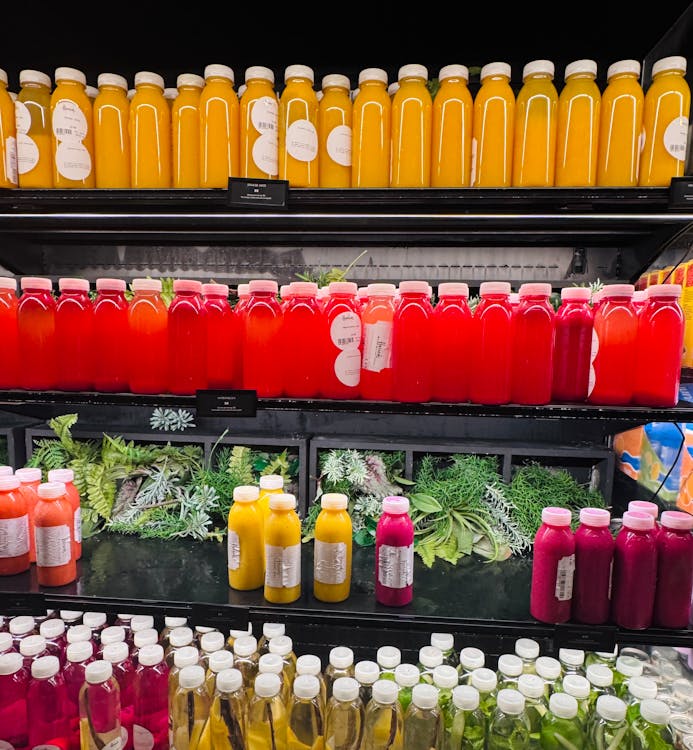
From 2030, PET beverage packaging must contain at least 30% recycled content. From 2040, that rises to 65%. Comparable but lower percentages apply to other plastic packaging formats.
On paper, this looks manageable. In practice, it is more difficult. Food-grade rPET is structurally scarcer than virgin PET, and prices have been higher than new material for years. Demand is expected to accelerate from 2028 as beverage producers across Europe move to comply at the same time. Companies that do not secure supply now are likely to face a premium later, or a shortage.
For the organic juice industry, there is an additional complication. Part of the organic consumer base, and some certification schemes, remain cautious about recycled plastic in direct contact with a product positioned as pure. That concern is less prominent in mainstream retail than in specialist stores and foodservice, but it is still a real factor in marketing and sales.
What buyers should do now:
- Secure multi-year rPET contracts with indexed pricing and guaranteed volume.
- Assess whether glass or bag-in-box is a better route for selected SKUs, not only because of rPET scarcity, but also because refillable glass supports refill targets as outlined below.
- Review whether concentrate or bulk deliveries to B2B customers provide a more efficient packaging route than finished product in retail-ready packs.
3. Refill and return systems force choices in the distribution model
PPWR introduces refill targets for beverages: from 2030, 10% of beverages must be placed on the market in refillable packaging, rising to 40% by 2040. The regulation also requires member states to implement deposit return systems for PET bottles and cans. These systems are already active in the Netherlands and Germany, while implementation is advancing in countries such as France and Spain.
For exporting organic juice brands, this means one SKU can no longer remain identical across Europe. Deposit logos, return codes, and packaging registration requirements differ by country. That has a direct impact on labelling, inventory planning, and logistics.
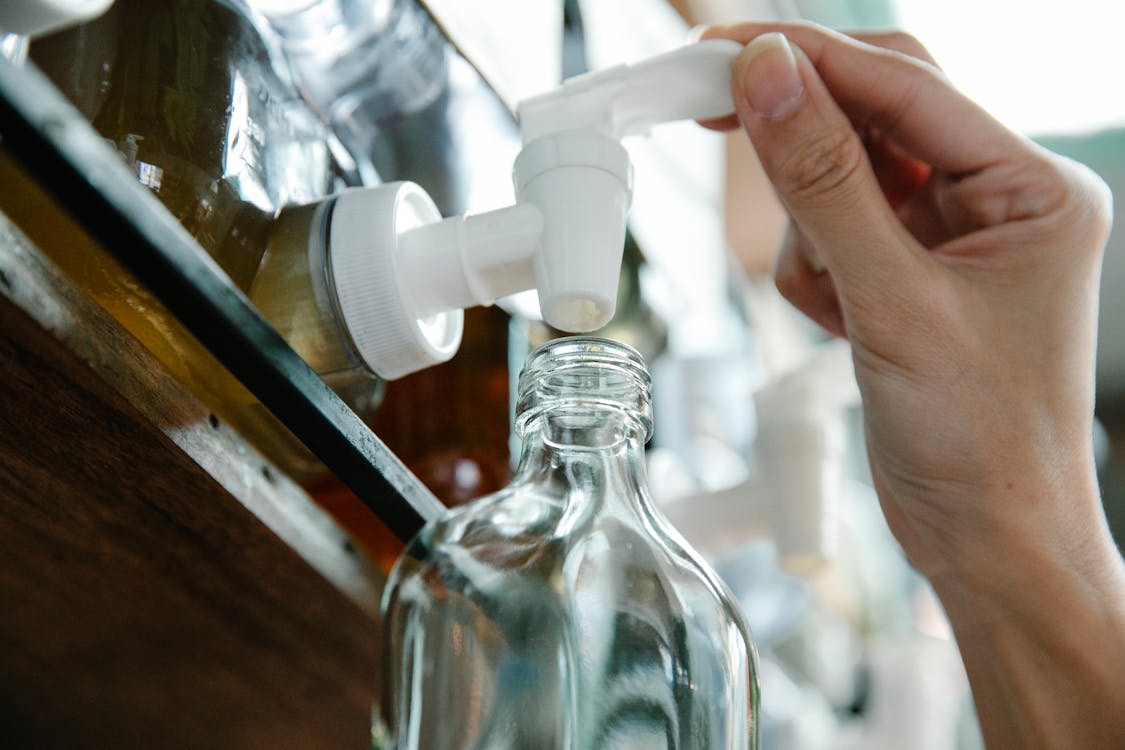
At the same time, refill obligations create opportunities. Organic juice has a strong position in foodservice, gyms, health stores, and specialist retail, channels where refillable bottles have historically performed better than in mainstream supermarket distribution. Brands that set up refillable systems for foodservice now can prepare for compliance while building a clear competitive differentiator.
What buyers should do now:
- Map which deposit return scheme applies in each EU market where the product is sold and note the implementation deadline.
- Decide whether to join a collective system or build a dedicated return flow for specific channels.
- Assess whether a foodservice SKU in refillable glass is commercially justified.
What to do in the next twelve months
The companies that will still supply the market smoothly in 2030 are the companies that complete these three actions now, in 2026:
- A packaging audit across all SKUs, including a recyclability class by format and a redesign plan for anything that scores too low.
- An rPET commitment in all new supplier contracts, with volume and price indexation fixed for the 2028 to 2032 period.
- A market review by EU country covering deposit return implementation dates and a clear decision on refill channels.
PPWR is not the first packaging legislation in Europe, but it is the first to impose truly binding requirements across the full chain, from material choice to return flow. For the organic juice industry, which positions itself around purity and sustainability, this is not only a compliance challenge. It is also a chance to prove those claims in operational terms. That opportunity comes with a deadline.
Sources
FoodDrinkEurope. (n.d.). FoodDrinkEurope Position Paper: Recommendations for the PPWR. Retrieved from https://www.fooddrinkeurope.eu/resource/fooddrinkeurope-position-paper-recommendations-for-the-ppwr/
EUROPEN. (n.d.). Packaging and Packaging Waste Directive. Retrieved from https://www.europen-packaging.eu/policy-area/packaging-and-packaging-waste-directive/
Frequently Asked Questions
The regulation was published in early 2025 and applies directly across all EU member states. The first hard product deadlines begin in 2030, with additional obligations following in 2035 and 2040.
Yes. The regulation covers all packaging placed on the EU market, including transport packaging, IBCs, and industrial formats. The percentages and deadlines vary by category.
PPWD, the Packaging and Packaging Waste Directive, had to be transposed into national law by each member state. PPWR is a regulation, so it applies directly in all countries at the same time and in the same wording. That makes compliance tighter and enforcement more uniform.
No. PPWR does not distinguish between organic and conventional beverages. However, organic certification schemes may impose their own packaging requirements that are stricter than PPWR.